

Author: Alix Nathan
Genre: historical fiction, neo-gothic, enlightenment
Rating: 4/5
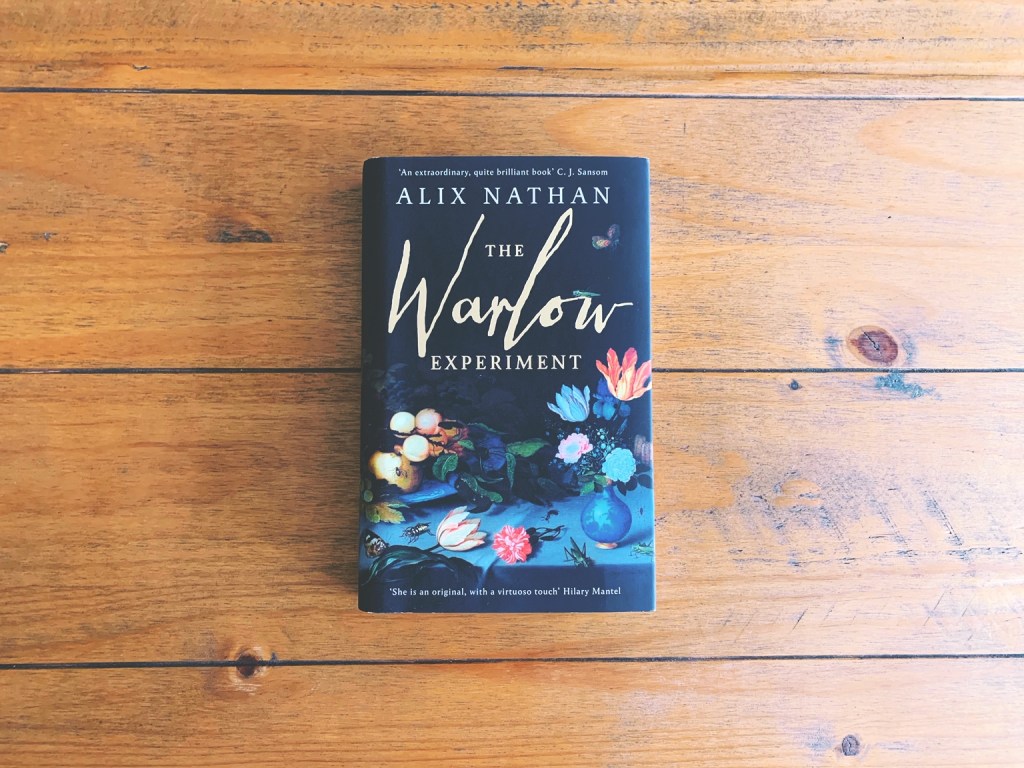
Verdict
The Warlow Experiment is incredibly reminiscent of the Romanticism module I took during my first year at university. And whilst I want to give a shout out to this part of my course finally coming in handy, it really didn’t contribute much beyond me thinking “she really made sure to include a lot of the period’s characterising traits and themes”. Not a groundbreaking revelation, but I can confirm the book depicts late eighteenth century England quite well. You’re welcome.
A more intriguing fact about this story is that Alix Nathan based it on a real ad placed in a paper back in 1793 – which both surprised me, but didn’t really surprise me either. Of course someone wanted to lock another person up for several years in the name of science. Standard really.
The novel inhabits a time when science was becoming more accepted alongside religion in society and gaining more notoriety. Everyone was desperate to make their mark and be remembered and Powyss, a gentleman living in Moreham, is no exception. Placing an ad in 1793 asking for a man willing to abstain from social engagement and inhabit underground rooms for seven years, all the while documenting his thoughts and experiences in journals, the premises of the novel immediately showcase the typical experiments that would be set up at that time. Following completion of the experiment, the individual would be given £50 a year for the rest of their life and was promised glory and fame from Powyss’ writings of the experiment. Local labourer John Warlow is the only man to answer the ad.
Despite his ambition, Powyss is very good at demonstrating his lacking capabilities as a scientist. For starters he begins this experiment with preconceived expectations for the results. Surrounded by comfort, an organ, books and the ability to ask for whatever he wants, Warlow’s eventual emergence is anticipated to be a refined spectacular affair. Powyss wants him to emerge an educated, philosophical individual. The reality, we find, is a different situation altogether. I think this has been an interesting book to read during lockdown, where we ourselves are restricted in our ability to speak to people and venture outside (albeit, nowhere near Warlow’s level). Having felt a little stir-crazy myself over the past few weeks, I can only imagine what it would be like to be stuck underground with just your thoughts for company. At least we have access to the tech that we do.
Powyss, the self-assumed scientist in this experiment, has no qualms about sending a man underground for seven years. He dreams of being a man of science and is himself quite reclusive, favouring the company of few and to focus on botany. Having tested out the rooms for several days himself prior to Warlow, he deemed it an enjoyable time. Of course, Warlow is not Powyss. And several days is not several years. Misconception is a common theme in this novel, particularly with Powyss. He places himself in the possible role of omniscience, and unfortunate role of omnipotence.
There’s a constant question considered and asked throughout the story: is Warlow a prisoner? As the years go by we see characters advocate for both his release and his continued containment. Though not a bad man, Warlow hadn’t been a good man in his previous life either. Warlow’s living situation is seen as either a blessing or a curse depending on whose narrative you’re in. As you do jump around quite a bit it’s hard to be swayed by a particular argument. Equally, you get quite a rounded view, allowing you to make a fairly informed decision yourself.
My answer would be yes, he is. Whilst he is looked after to a degree, with his food, clothing and piss-pot taken care of by others, as time goes by you witness both his physical and mental degradation. He also submits to the belief that he is surrounded by she-demons that want to drag him to hell. His containment lends to consequential madness, and Powyss’ delay in release him is pivotal, with the actions of the remaining narrative originating from the repercussions of this decision.
Power and hierarchy are constantly being challenged in the background. The Warlow Experiment is set to the backdrop of the French revolution and so there is conflict and revolution brewing throughout the novel. Several characters, empowered and inspired by the events in France and works of Tom Paine, cite the need for similar action in Moreham. From uneducated radicals such as Price to admirers like Powyss’ pen-pal Fox, their understanding and influence also dictates the outcome.
Essentially, every action taken in this novel matters. It all comes together to form the ending. Everyone matters in equal measure (which is what they wanted anyway). I enjoyed this book, it didn’t take me long to read at all. It was set in the eighteenth century, but the language was easy to read, making it one I can easily recommend to everyone – I find my friends are less open to reading books actually written in the eighteenth century. A captivating journey, The Warlow Experiment was a bittersweet but lovely book to read. And a reminder that knowledge comes at a cost. And that you can’t truly hermit it without going a little mad.
Find the book on Goodreads!
 Escape Through The Pages