
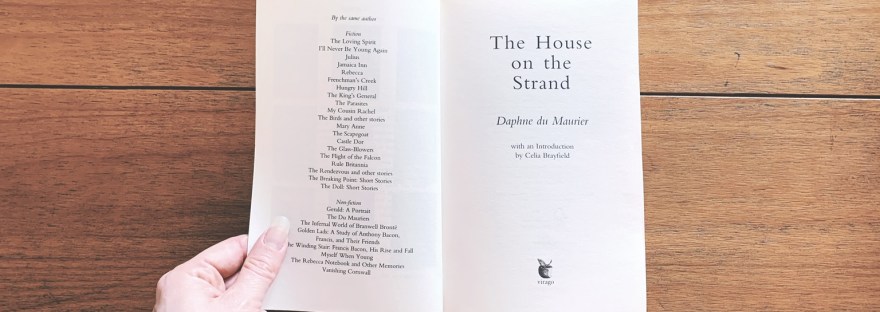
Author: Daphne du Maurier
Genre: mystery, thriller, historical fiction, twentieth century fiction
Rating: 4/5
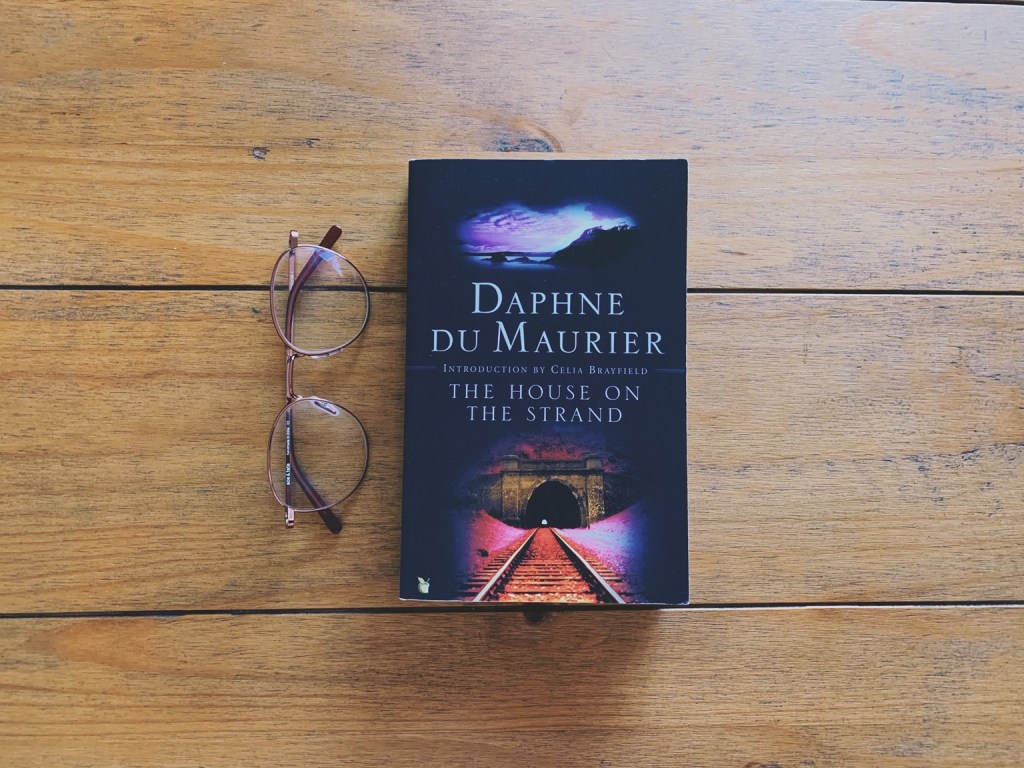
Verdict
*slight spoilers ahead*
The penultimate novel she ever wrote, The House on the Strand is one of Daphne du Maurier’s lesser known works. And one I was very excited to read. The only other du Maurier book I’ve read so far is Rebecca, which was brilliant and made me realise I wanted to read more of her work. Seems lockdown has helped me finally do that. I chose The House on the Strand because the premise was really appealing. Time travel isn’t a narrative I’ve explored much. I love historical fiction too, so a time travel story where we go back in time was right up my street.
The novel is centred around Dick Young, a man spending his summer in Cornwall. The house he’s staying at is regal, mysterious and belongs to his long-time friend Professor Magnus Lane. Dick arrives ahead of his family and is asked by Magnus to test out a formula he’s been working on. The result? Dick finds himself transported back to the same spot, in the 1300’s.
The historical fiction element is quite light in the novel, there’s not a high amount of detail. The scenes are outlined enough that you can start to picture life in the fourteenth century, but only as background noise. I’d argue we’re able to pay attention to it as much as Dick does, which isn’t much. He very much has a one-track mind that becomes more obvious as the novel develops. However, there’s enough detail provided by du Maurier for you to gain a basic contextual understanding of how society functioned during that time, with a focus on religion and the monarchy made clear.
The story has a slower pace than you expect, the drama and conflict is a lot more psychological than it is physical, but that is typical for du Maurier. A lot of the fighting and action is internalised and played out in the mind. If you just focus on the physical action, it’s quite limited; either Dick is imagining it or it’s happening in the fourteenth century creating an element of passiveness. A lot of calm discussion and walking, I’m also certain Dick will have achieved 10,000 steps with ease on those days. His mind is in utter turmoil, as he assesses and explains every action he and his fellow characters play out. There is this undefined need for justification.
I studied Wuthering Heights for A level English and one of the key questions we had to consider was ‘is Heathcliff mad?’. Was he really seeing Cathy’s ghost, or was it a figment of his imagination? I think a similar question is asked in The House of the Strand; is Dick really able to interact with the past, or is he hallucinating?
The novel sways you from side to side on this, there seems to be no clear-cut answer. However, ultimately I would argue for hallucinations. Dick has emersed himself in a world where he identifies with someone that is both immoral yet seemingly heroic. The fourteenth century in this novel is designed to mirror the entrapment Dick experiences in his everyday life, particularly when it comes to his relationships. Where Dick’s restrictions lead him to feel unfulfilled and bitter, the constraints of life in the fourteenth century are led to give the appearance of passion. In the twentieth century (and today) adultery is seen to be immoral and wrong, yet in the fourteenth century Dick depicts it as forbidden romance being admirably pursued. The time travel in the story seems to be used to create a new – yet similar – world where different rules can be applied. That similarity means that the same punishments, however, still prevail.
I would say the story maintains a relatively light, albeit sinister, tone for most of the time. But once it hits that pivotal plot point (you’ll know it when you read it) it turns darker fast. If I remember correctly, this shift in tone is similar to how Rebecca plays out (it’s been a while so forgive me if I’m wrong). I found upon the shift in tone the novel became more addictive, as it completely turned the story on its head. Everything I thought I knew about the story wasn’t so concrete anymore. The ending becomes enigmatic rather than predictable, showing a true abhorrence of structure and expectation. The House on the Strand is a book that belongs to the world of modernity – and your bookshelves.
Find the book on Goodreads!
 Escape Through The Pages